
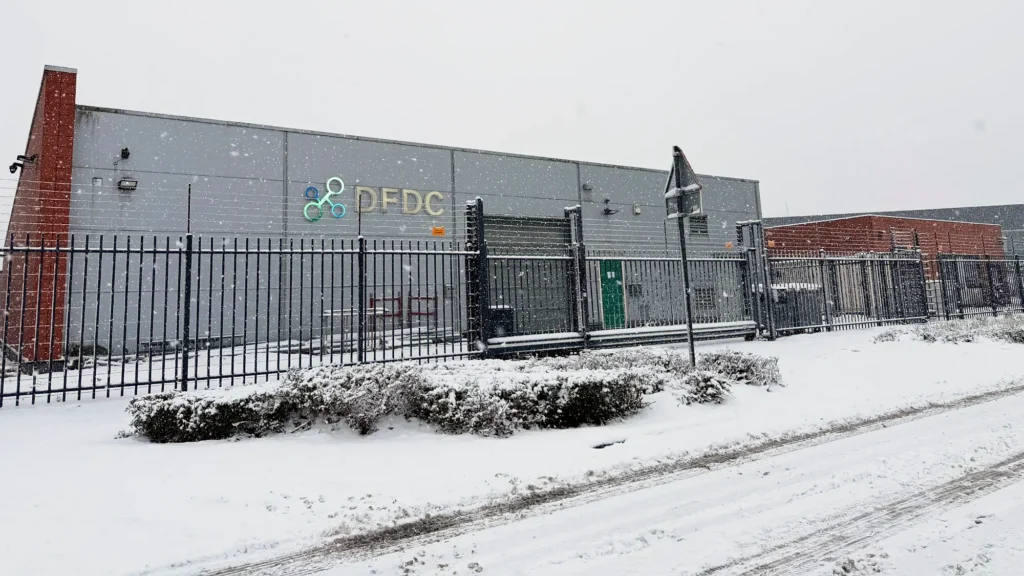
Amsterdam remains the Netherlands’ largest and most connected data center hub, but the room to keep building there is shrinking. A years-long construction moratorium, a power grid now running at capacity in parts of the region, and tightening provincial siting rules are pushing new growth to look elsewhere, including just down the road in South Holland.
The Amsterdam market itself is not shrinking: Cushman & Wakefield puts its operational capacity at 927 MW as of the second quarter of 2026, up 9 percent year-on-year, with another 102 MW under construction and 251 MW in planning. But the easy growth is over. Since a 2019 moratorium on new large-scale construction, expansion in and around the city has run into permitting limits, grid congestion, and a provincial policy that increasingly decides where, not just whether, a data center can be built.
For organizations planning the next phase of their IT infrastructure, that raises a practical question: if Amsterdam is no longer the default place to grow, where does that growth go instead?
Amsterdam’s Room to Grow Is Shrinking
Amsterdam’s constraints are not just about space. In April 2026, a court in Arnhem sided with national grid operator TenneT after developer Goodman challenged TenneT’s decision to pause a 70 MW grid connection request near Schiphol. The court found that the regional grid, around the Vijfhuizen high-voltage substation in Haarlemmermeer, was genuinely running at full capacity, with constraints that could last until around 2035. TenneT has paused similar requests from a limited number of companies in the same region since early 2026.
Provincial policy adds a second layer. Under Noord-Holland’s data center strategy for 2025 through 2027, new large-scale facilities above 2,000 square meters or 5 MVA may only be built within three designated clusters: Amsterdam, Haarlemmermeer and Hollands Kroon, and no new hyperscale development is permitted anywhere in the province for the duration of that strategy. Even within the Amsterdam cluster itself, only half of the remaining available space is set to be released through 2030.
None of this means Amsterdam is finished growing. It means the growth that does happen is more constrained, more contested, and slower to permit than it used to be, pushing some organizations to look at their options elsewhere in the country.
Growth Finds Room in South Holland
That growth potential is increasingly looking toward other regions across the Netherlands, ones with more room left on the grid and in the permitting process. One region stands out: South Holland, including Rotterdam and The Hague. The region offers what has become harder to find around Amsterdam: available grid capacity and shorter permitting timelines. Existing data centers in the region have upgrades and expansions in the pipeline, and new facilities are being established there as well, including large-scale investment aimed at AI and cloud capacity in Rotterdam.
The wider numbers back up the shift. Vacancy across the Netherlands’ operational data centers has fallen to roughly 5 percent, and industry analysts project the Dutch data center market will keep growing at a double-digit annual rate into the early 2030s, driven largely by cloud and AI workloads. For organizations that need colocation space but don’t need, or can’t get, a foothold in Amsterdam itself, South Holland offers a practical alternative that is close enough to stay connected to Amsterdam’s ecosystem.
DFDC: A Local Answer in The Hague
Data Facilities Data Centers (DFDC) is one of the operators positioned to absorb that demand. The company operates a carrier-neutral colocation facility in The Hague, within easy reach of Amsterdam’s connectivity and customer base but outside its most constrained grid area. The facility is designed and operated to TIA-942 Rated 3 standards, with full internal redundancy, supports rack densities of up to 20 kW, and is certified to ISO 9001 and ISO 27001, among other operational standards.
DFDC traces back to 2012 and became part of Ellada Holdings’ portfolio in 2023. The company is also expanding its own capacity in The Hague significantly, giving it more room to grow as demand from outside Amsterdam continues to build.
“We’re seeing strong, consistent demand from organizations looking beyond Amsterdam for data center space to support the next stage of their growth,” says Roy Premchand, Interim Commercial Director at DFDC. “The Hague gives them a way to stay close to Amsterdam’s connectivity and customer base without competing for space and power that simply isn’t there anymore. That’s exactly why we’re continuing to invest in capacity here.”
What This Means for Organizations Planning Growth
For organizations running or planning data center infrastructure in the Netherlands, Amsterdam’s constraints are now a planning factor, not a temporary inconvenience. Grid congestion in parts of the region is expected to persist for years, and provincial policy is unlikely to loosen in the near term.
South Holland, and facilities like DFDC’s in The Hague, offer a way to keep growing close to the Amsterdam market without waiting on a grid connection that may not materialize. For many organizations, that is becoming less of an alternative and more of the obvious next step.
Looking Ahead
DFDC’s expansion in The Hague is still underway, with further phases planned to keep adding capacity.
“This expansion reflects exactly the shift we’re seeing across the region,” says Savvas Bout, CEO of DFDC. “We completed the first 1.75 MW phase of our facility in The Hague in 2025, and we’re continuing to invest in additional capacity because demand for space outside Amsterdam keeps growing. It’s exactly why we keep building here.”
The broader shift away from Amsterdam is not expected to reverse soon. For DFDC, and for the wider South Holland market, that points to steady, continued investment rather than a short-term response to a temporary squeeze.
About DFDC
Data Facilities Data Centers (DFDC) operates a carrier-neutral colocation facility in The Hague, purpose-built for reliability, security, scalability and sustainability. Since its founding in 2012 and its acquisition by Ellada Holdings in 2023, the facility has undergone substantial redevelopment, with every facility decision, contract, and audit cycle owned by the same in-house engineering team. This operational model, combined with full internal redundancy, TIA-942 Rated 3 design standards, and ISO 9001, ISO 27001, and SOC 2 Type II certified operations, allows DFDC to match solutions directly to each client’s operational goals.
DFDC is backed by Ellada Holdings, a privately held holding company with two decades of hands-on operating experience in digital infrastructure across Europe and the United States. Ellada invests for the long term in the businesses it owns, continuously strengthening capacity and infrastructure to meet the highest standards of reliability. This long-term backing gives DFDC the stability and investment capacity to keep scaling as a strategic infrastructure node in the international digital ecosystem.
Media Contact
Data Facilities Data Centers (DFDC) — [email protected] | +31 (0)88 2700 200 | dfdc.io