Mix-and-match flexibility
Different routes can run over different carriers. Verizon and Eurofiber can be paired for diverse-path, with Relined available as a third option. The hand-off process is identical across upstreams.
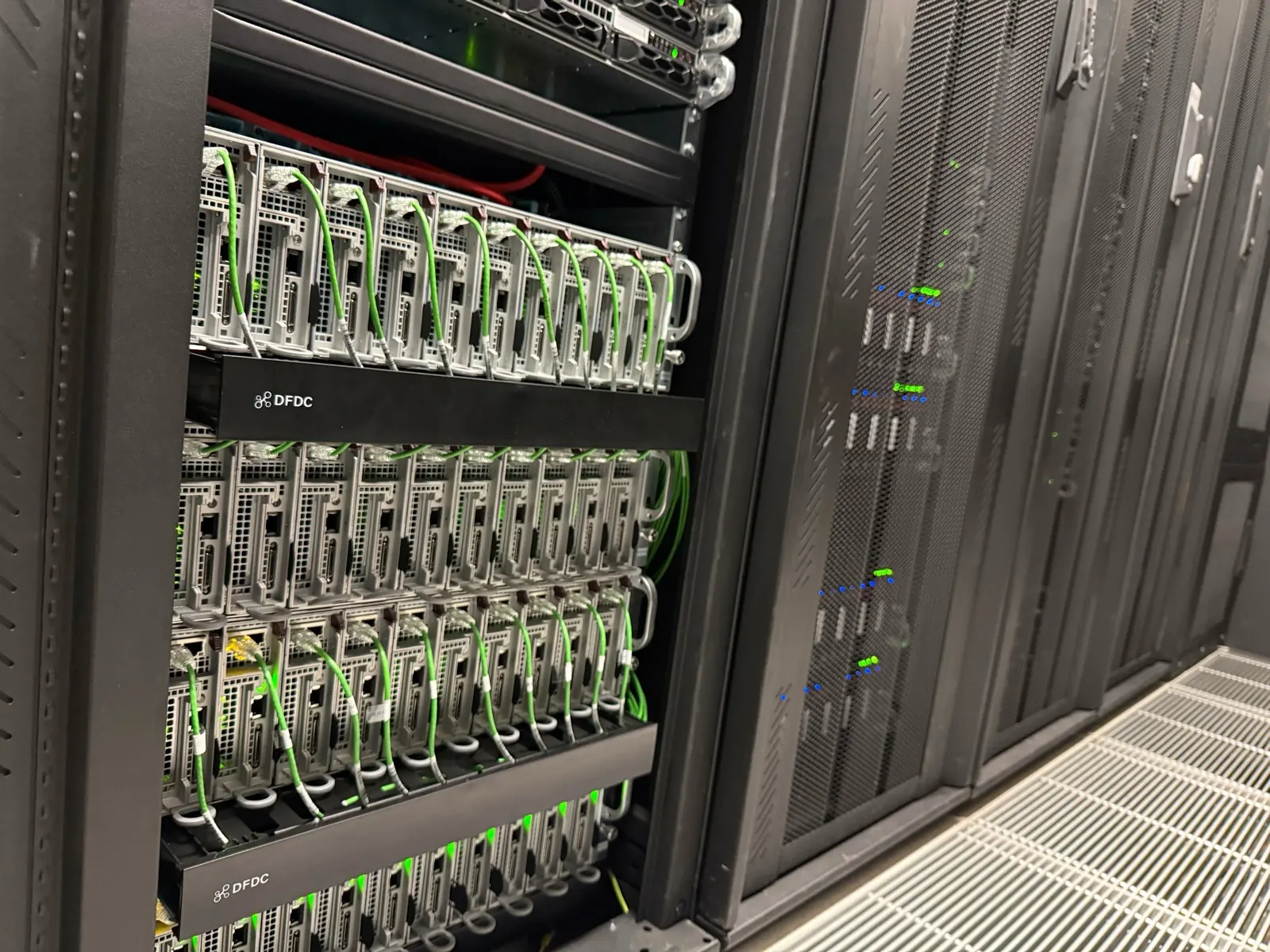
Seven dark-fiber carriers terminate inside THG1 on redundant paths each. Native peering via LSIX, Tier-1 transit one cross-connect away, AMS-IX via partners in the building. The customer selects the carrier and the contract structure. Data Facilities issues the LOA and pulls the cross-connect.
Carrier neutrality here is a structural choice. Data Facilities owns the colocation and the BareFABRIC layer-2 / layer-3 kit. It does not own the dark fiber underneath and operates no upstream of its own.
That structure lets customers select the network service provider suited to their requirements — by route, by term, by contract — with no hosting provider intermediating the relationship.
The practical effect: customers avoid carrier lock-in, obtain route diversity, and can renegotiate carrier contracts without leaving the facility.
Each follows from the structure — owning the colocation, not owning the fiber. None carries an additional charge.
Different routes can run over different carriers. Verizon and Eurofiber can be paired for diverse-path, with Relined available as a third option. The hand-off process is identical across upstreams.
Seven carriers leave THG1 over three diverse fiber points of entry. Single-backhoe risk does not take down a customer circuit. Diverse-path is documented in the install record.
Customers compare carriers on the terms that apply — by route, by contract length, by IRU. Data Facilities does not mark up the underlying fiber; it charges the cross-connect once and the customer retains the upstream relationship.
Each terminates inside THG1 on redundant paths. Customers pick the carrier and the contract structure; we issue the LOA and pull the cross-connect at the patch panel.

In-building dark fiber
Partner profile
In-building dark fiber
Partner profile
In-building dark fiber
Partner profile
In-building dark fiber
Partner profile
In-building dark fiber
Partner profile
In-building dark fiber
Partner profile
In-building dark fiber
Partner profileWe handle the LOA workflow, pull the cross-connects in the meet-me room, label the patches, document the diversity in the install record. The customer lights the pair with the optics their DWDM equipment supports.
Cross-connects to carriers are charged at a low one-time NRC, no monthly recurring. Diverse-path installs are available on request, with documented physical separation.
A request specifies the endpoints, the term and any diversity requirements. The response returns per-pair, per-route, term-based pricing across the selected carriers.


