Distributed 2N+1
Distributed 2N+1 electrical and mechanical design throughout. Every dependency has a backup, every backup has its own backup. No single fault path can disable a customer load.
THG1 is the Data Facilities anchor facility — carrier-neutral colocation in The Hague, with native peering, seven diverse fiber carriers and 20 kW per rack air-cooled density. Operated by the senior engineers who designed and built the underlying network, with a single accountable team from utility hand-off to customer port.
THG1 is engineered for sustained operation beyond the first hour of an outage, not only the first hour itself. Refueling contracts are in place with a four-hour delivery SLA. UPS modules are hot-swappable and stocked on-site. The electrical and mechanical design is distributed 2N+1 from the utility hand-off through to the cabinet.
The facility is operated by the team that owns the network. The senior engineers who designed the fabric also provide hands-on response — one team, one accountability line. Every dependency has a backup; every backup has its own backup.
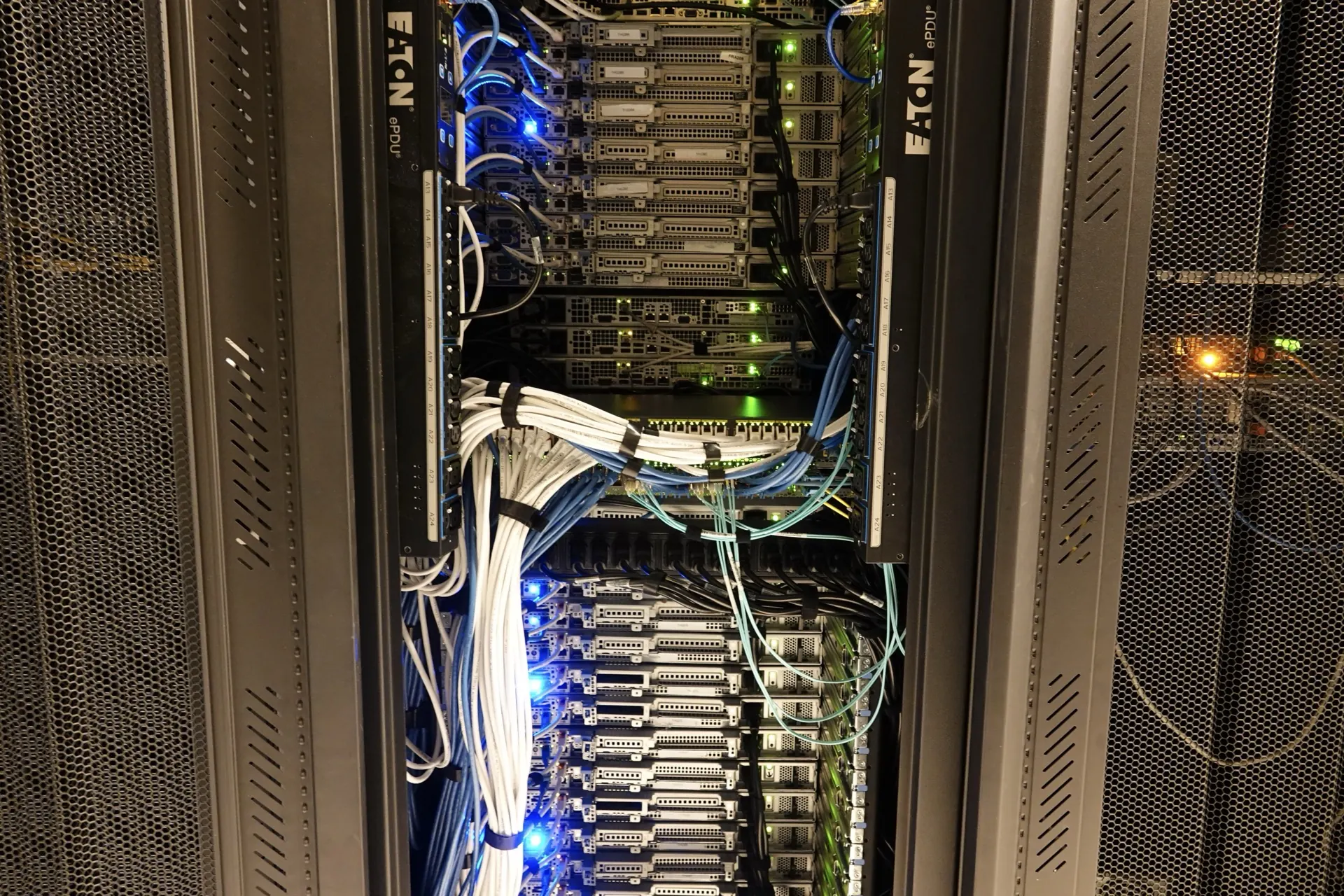
Phase 1 (1.75 MW) is built and live. Phase 2 adds another 1.75 MW, scheduled for completion in 2027. Capacity reservations available against the Phase 2 build.
Distributed 2N+1 electrical and mechanical design throughout. Every dependency has a backup, every backup has its own backup. No single fault path can disable a customer load.
Four on-site diesel generators, drilled monthly, with a refueling contract on a four-hour delivery SLA. Drill logs available on request as part of the audit cycle.
Three independent UPS clusters with hot-swappable modules. Four ATSes hand utility-to-genset cleanly under load. Battery banks stocked on-site, no off-site retrieval delay.
Diverse A+B feeds to every cabinet, sourced from independent boards. Quarter-cabinet customers get the same redundancy topology as full-rack tenants.
Cabinet-level metering across the floor. Power profiles up to 20 kW air-cooled per cabinet. Capacity reservations available against the Phase 2 build for high-density deployments.
Power topology audited under the same compliance cycle as the rest of the facility. SOC 2 Type II evidence covers operational controls. Certificates available under NDA.
Sealed cold-aisle containment, room-level humidification active and maintained inside ASHRAE allowable, N+1 CRAC redundancy across the floor. A CRAC unit can be taken out for service without thermal impact.
Density profiles up to 20 kW per cabinet air-cooled. Direct liquid cooling is available on request for AI training nodes, high-density GPU clusters and sustained inference fleets.
Mechanical design is distributed 2N+1 alongside electrical — same posture, same redundancy class.
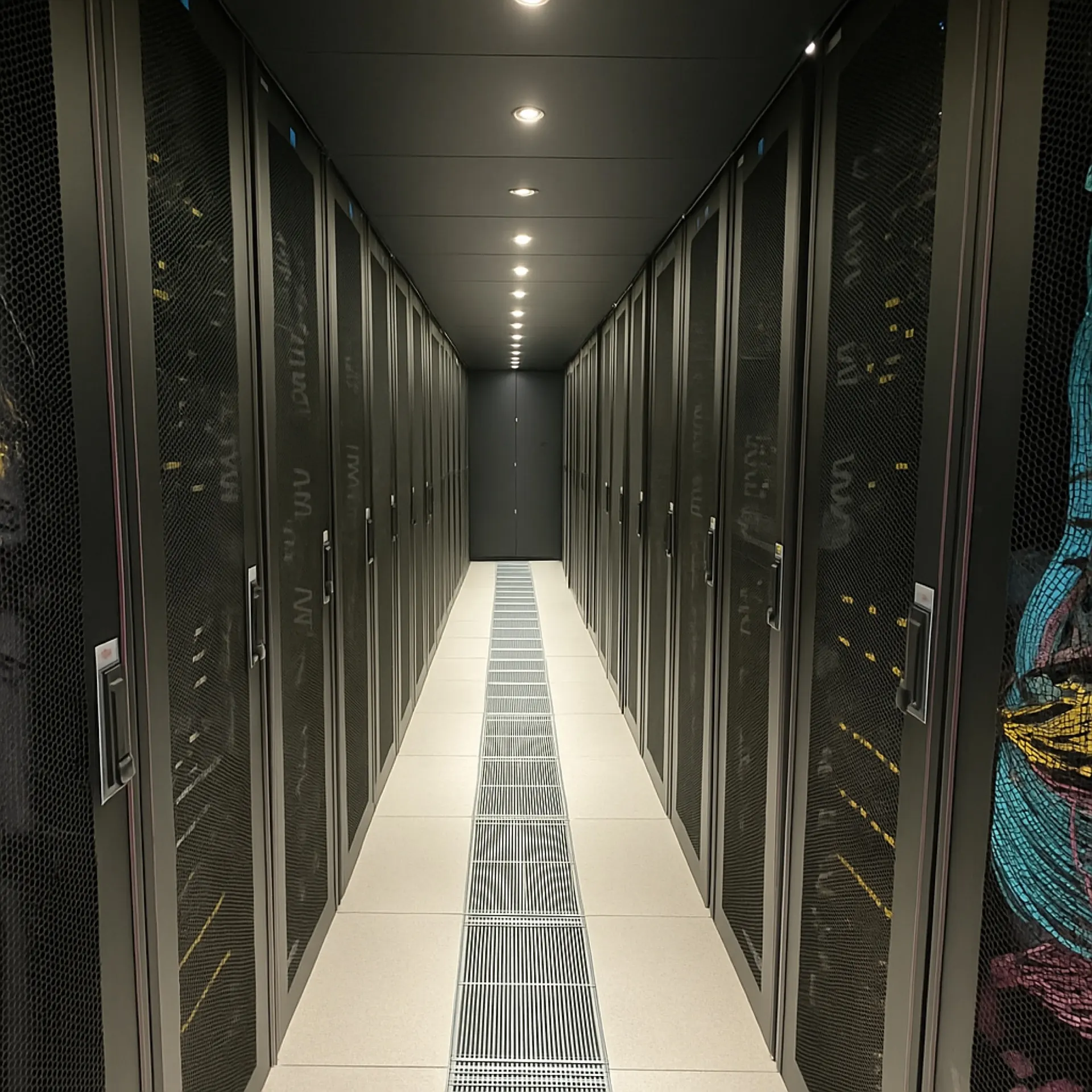
Connectivity starts at the property line. THG1 has multiple diverse fiber points of entry into the building, each landing in independent meet-me areas. Seven carriers terminate inside; native peering and metro transport sit on every BareFABRIC port.
Multiple physically diverse fiber entries into the building, each routed to independent meet-me areas. A single excavation outside the property does not isolate the facility.
Seven dark-fiber carriers terminate inside the building — Verizon, Eurofiber, Relined, AFiber, DataFiber, KPN and Odido — on redundant paths each. Customers pick the carrier that fits their contract structure.
DF FiberThe Data Facilities access layer. Native peering and 14-facility metro fabric on every port, included. 100 G and 400 G ceilings, MTM by default.
See BareFABRICEyeball reach via peering. AMS-IX is reachable through partners in the building.
Internet PortBareFABRIC ports light at THG1 and at thirteen other facilities across The Hague, Naaldwijk, Rotterdam and Amsterdam. Same SKU, same SLA, same portal at every site.
Provision ports, configure VLANs, issue LOAs and enable route-server sessions through the portal or the OpenAPI 3.1 surface. Terraform provider on the v1.x roadmap.
The facility is certified to VRKI 2.0 Class 4 — the highest risk classification in the VRKI framework.
Electrified perimeter fence with full surveillance coverage. Approach lanes and the fence line itself sit under overlapping CCTV with 24/7 monitoring at a certified alarm receiving center.
External doors, walls, roof and any below-grade openings are hardened — engineered to resist a determined attacker with portable power tools for a sustained period.
Top-tier intrusion detection across the perimeter, envelope and interior. The system is zoned — data halls, MMR, office and loading areas are independently armable and report independently. Sensor mix includes contact, motion, glass-break and seismic where appropriate.
Around-the-clock monitored CCTV with retention sufficient for forensic review. Coverage includes the perimeter, every entry point, internal corridors and white-space aisles.
Dual-path, supervised alarm transmission to a certified PAC, paired with a contracted private security response with guaranteed arrival times. Authority notification runs in parallel.
Multi-factor authentication at every door from the building entrance to the rack. Every access event is logged and retained. Visitors are pre-registered and escorted; contractor work follows a documented permit procedure.
All certifications below are current and made available to procurement and audit teams under NDA.
Quality management system. Process ownership, change management and continuous improvement — the operating discipline underlying every other certification listed here.
Information security management system, current revision. Covers our control environment, risk treatment, supplier and access controls, and the audit trail behind them.
Independent attestation over operational controls for security, availability and confidentiality. Type II covers controls over a sustained period, not a snapshot.
The physical-security build is certified at Class 4, the highest classification in the VRKI 2.0 framework.
Headline specs for buyers running diligence. Detailed technical documentation, audit reports and certificates are available under NDA.
| Location | The Hague, Netherlands — Moezel 3 & 5, 2491 CV |
|---|---|
| Total power capacity | 3.50 MW gross |
| Phase 1 (live) | 1.75 MW |
| Phase 2 | +1.75 MW, scheduled 2027 |
| Total racks (design) | 480 |
| Racks online | 225 |
| Electrical & mechanical | Distributed 2N+1 throughout |
| Backup power | 4 × diesel generators, four-hour refueling SLA |
| UPS topology | 3 independent UPS clusters, hot-swappable modules |
| Transfer | 4 ATSes (automatic transfer switches) |
| Cabinet feeds | Diverse A+B from independent boards |
| Cooling | Sealed cold-aisle containment, N+1 CRAC |
| Density (air-cooled) | Up to 20 kW per cabinet |
| Density (liquid) | Direct liquid cooling on request |
| Cabinet sizes | Quarter, half, full; private suites on request |
| Fiber points of entry | Multiple physically diverse routes into independent meet-me areas |
| Carriers in-building | Verizon, Eurofiber, Relined — redundant each |
| Native peering | peering, route servers with RPKI, included on every BareFABRIC port |
| Physical security | VRKI 2.0 Class 4 |
| Building envelope | Hardened against forced entry |
| Intrusion detection | Top-tier, zoned |
| Alarm transmission | Dual-path, supervised, certified PAC |
| Surveillance | 24/7 monitored CCTV, retained logs |
| Compliance | ISO 9001:2015 · ISO 27001:2022 · SOC 2 Type II |
| Service uptime SLA | 99.99 %, service credits backed |
Tours are conducted by an operations engineer rather than an account manager. Technical questions ordinarily reserved for a second meeting can be raised on the first visit — engineering, security and procurement teams are accommodated on the same visit.


