Density support
Up to 20 kW per cabinet air-cooled. Cabinet-level metering, A+B feeds from independent boards. Capacity reservations against the Phase 2 build.
Cabinets sized for hyperconverged platforms, region-pair builds across the metro fabric, native peering on every port. Engineered for hyperconverged IaaS deployments.
The colocation envelope at THG1 is specified for hyperconverged IaaS deployments: 20 kW per cabinet air-cooled, distributed 2N+1 power, sealed cold-aisle, A+B feeds at every cabinet.
BareFABRIC ships with two free 10 G ports for THG1 tenants, native peering, and metro reach to thirteen other facilities. Region-pair deployments — active rack at THG1, warm at a paired metro facility — run on the same fabric, the same SLA, and the same portal.
BGP-native: bring your own ASN, peer via LSIX from day one, add an Internet Port on the same hand-off.
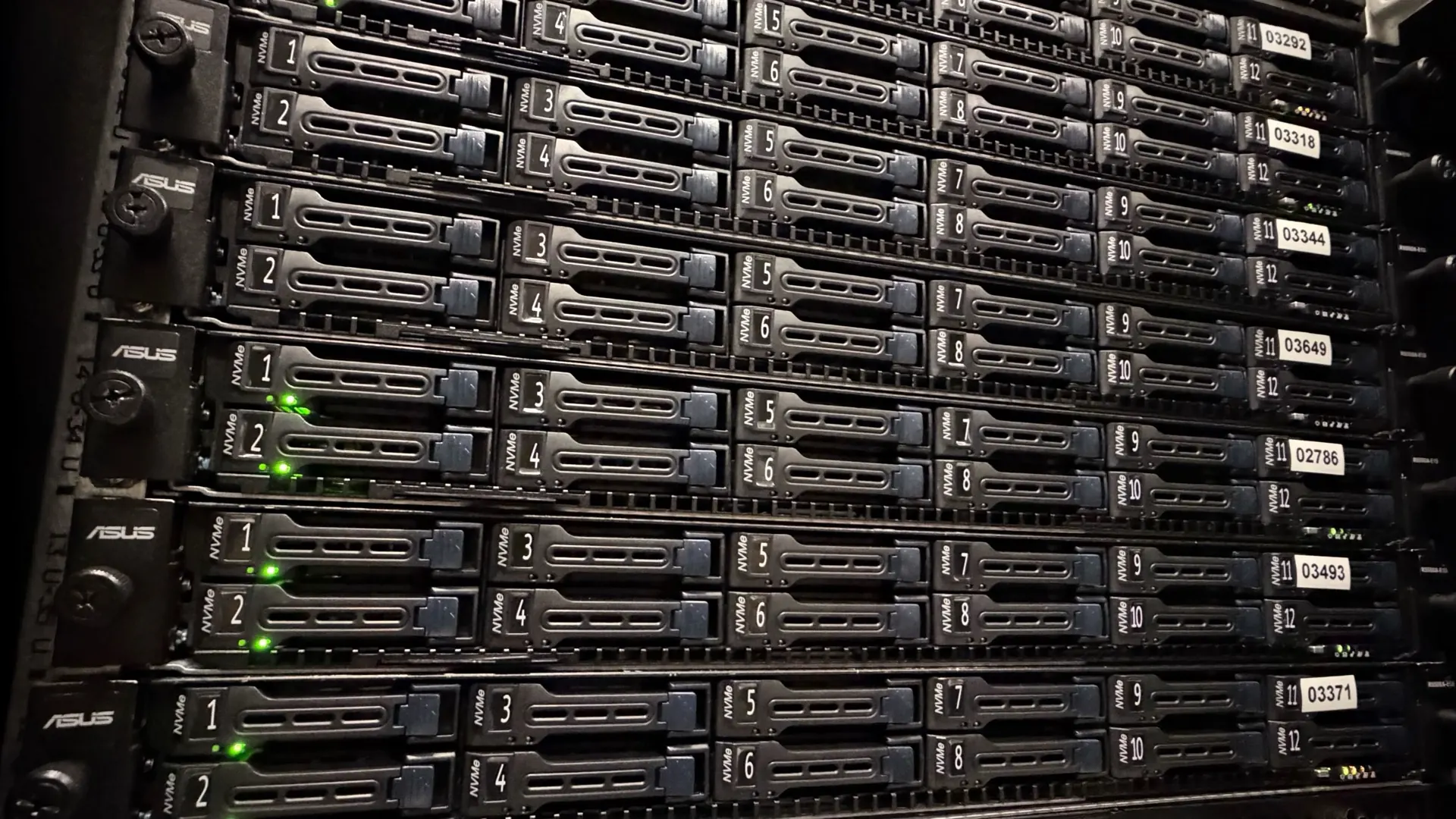
The platform is unchanged. The following are the configuration decisions specific to the cloud / IaaS profile.
Up to 20 kW per cabinet air-cooled. Cabinet-level metering, A+B feeds from independent boards. Capacity reservations against the Phase 2 build.
Bring your own ASN. Peer via LSIX from day one. Add an Internet Port on the same port. Route servers support RPKI.
Active at THG1, warm at any other fabric facility. Same SLA, same portal, no metro carrier in between. Sub-second L2 failover paths.
Provision ports, configure VLANs, enable RS sessions through OpenAPI 3.1. Terraform provider on the v1.x roadmap.
Escalations are handled directly by NOC engineers, without a first-line ticket queue. The on-call engineer for the shift owns each escalation from first contact to resolution.
ISO 9001:2015, ISO 27001:2022, SOC 2 Type II under NDA. These cover the audit positions that downstream tenants require.
A request specifies the kit profile, peering map and growth plan. Cabinet placement, feed sizing and connectivity are then engineered to the stated build.


